
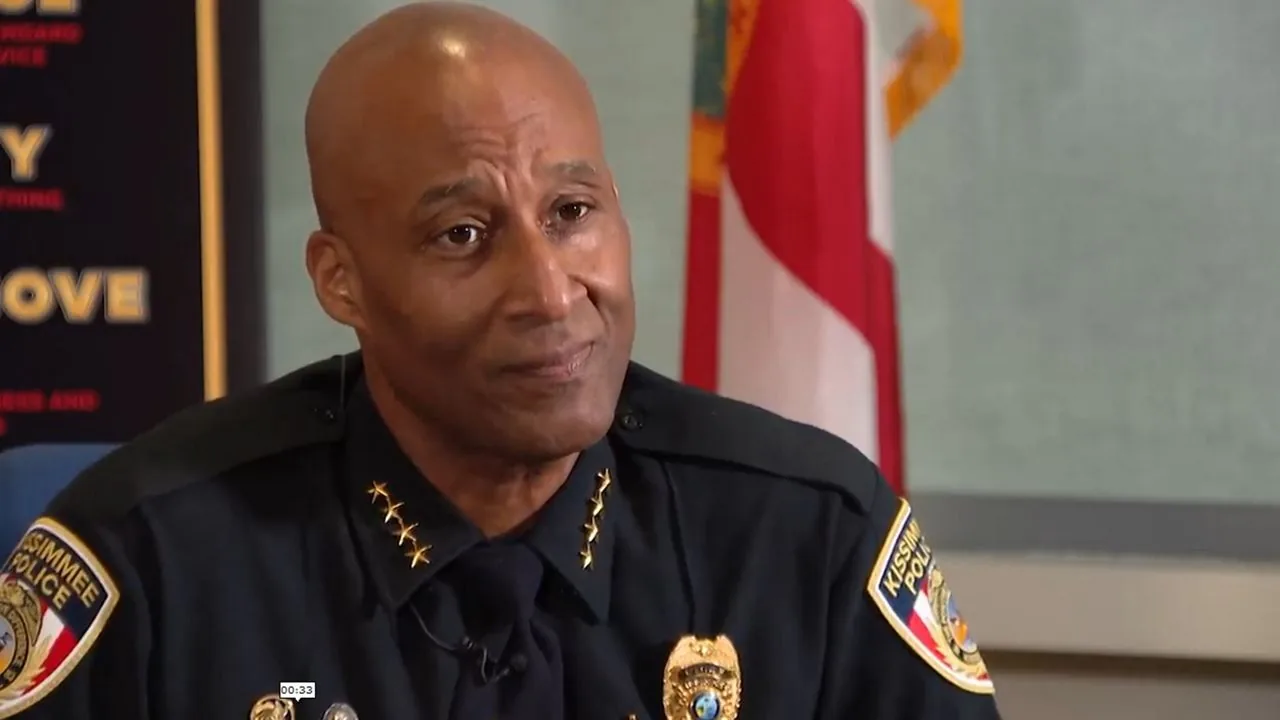
KISSIMMEE, FL — Kissimmee Police Chief Charles Broadway is marking 25 years since the Sept. 11 attacks by looking back on the weeks he spent at the World Trade Center site after the terrorist strikes. Broadway, who served six years with the New York Police Department before moving to Florida in 2002, said he was called back to work after finishing an overnight shift on the morning of Sept. 11, 2001.
He recalled hearing that a plane had crashed into the World Trade Center, turning on the television, saying goodbye to his family and heading out to help. Broadway was assigned to direct traffic on the Brooklyn side of the Brooklyn Bridge, where he saw people trying to reach Manhattan to check on loved ones and others trying to escape the danger zone.
A call back to duty on the morning of Sept. 11
Broadway said the day began like the end of a normal overnight shift until a phone call changed everything. On the line, he was told to return to work because a plane had struck the World Trade Center. The moment pushed him from sleep into the emergency response that would define the next several weeks.
He said he quickly turned on the television, realized the scale of the disaster and left home to report in. At the Brooklyn Bridge, he saw the confusion and desperation that spread through New York as the attacks unfolded. People were moving in both directions, some trying to get into Manhattan to find family members and others trying to get out safely.
That immediate chaos, Broadway said, made clear how central the police response would be in the hours that followed. His job on traffic control placed him in the path of families and first responders alike as they tried to make sense of the attacks and their aftermath.
What Broadway saw at the Brooklyn Bridge and Ground Zero
Broadway said one of the moments that stayed with him came when a man on a motorcycle stopped beside him and held up a picture of his wife. The man asked whether anyone had seen her, a question that captured the uncertainty and fear that filled the city after the attacks.
For Broadway, encounters like that shaped how he understood his role. He said he felt he was there for a reason and wanted to do whatever he could to help ease pain in one of the most horrific situations of his life. He also described helping collect personal items so families could have keepsakes and a way to remember lost loved ones with proper honors.
In the weeks after the attacks, Broadway said officers still had to work regular shifts, but many devoted off-hours to helping at Ground Zero. Some self-deployed each day to search for survivors and remove debris from the site, even as hope for rescue became more fragile.
False hopes, long hours and no survivors found
Broadway said he and other officers sometimes thought they heard banging from beneath the debris or believed they might have found survivors. Those moments often ended in heartbreak, because no one was found alive. He said the repeated disappointment added another painful layer to the work already being done at the site.
The search and recovery effort required officers to keep going while processing what they were seeing and hearing. Broadway said the work was physically and emotionally exhausting, but many officers continued to show up because the mission felt urgent and necessary. The effort at Ground Zero became part of a wider response that demanded both endurance and restraint.
Those weeks left a deep mark on him, not just because of the scale of the destruction, but because of the human stories tied to each day. Broadway said the experience forced him to confront grief and responsibility at the same time, while staying focused on helping others navigate the aftermath.
Losses years later deepened the toll of Ground Zero exposure
Broadway said the impact of 9/11 did not end when the debris was cleared. He later lost friends and mentors who had also served at Ground Zero, including Barry Galfano, his NYPD captain, who died in 2011.
He also lost his best friend, Steven Scalza, in 2014. Broadway said Scalza, who had encouraged him to become a police officer after college, died from exposure to the same toxins that affected many first responders. Those losses made the long-term consequences of the attacks feel even more personal.
Broadway described Galfano as someone he had hoped to emulate if he rose through the law-enforcement ranks. The deaths of both men reinforced for him that the impact of Sept. 11 stretched far beyond the day itself and continued to take a toll on the people who answered the call.
How the 2001 attacks still shape his leadership in Kissimmee
Now leading the Kissimmee Police Department, Broadway said his experience in New York still guides how he treats younger officers and employees. He tells new hires they will see difficult things and be exposed to scenes that can weigh on them, but he stresses that mental health and overall well-being have to remain a priority.
Broadway said that message comes directly from what he lived through after 9/11. He wants younger employees to understand that police work can be intense and that support matters when the job brings them close to trauma. His goal is to build a department culture that recognizes both duty and human limits.
He also shares his story at community events, 9/11 workouts and remembrance gatherings inside the agency. Those efforts, he said, are meant to honor the first responders who died after the attacks and to keep their sacrifice present for the people who came after them.
Valencia College appearance will extend his remembrance message
Broadway is scheduled to speak Friday as the keynote at Valencia College’s School of Public Safety. He plans to address honoring first responders who worked in the aftermath of the 2001 attacks and to reflect on the lessons he has carried into leadership.
The appearance gives him another chance to connect the anniversary of Sept. 11 with the work of today’s police officers and public safety students. For Broadway, remembrance is not only about the date itself, but about recognizing the people who responded, those who died later from related exposure and the families who continue to live with the loss.